

Introduction
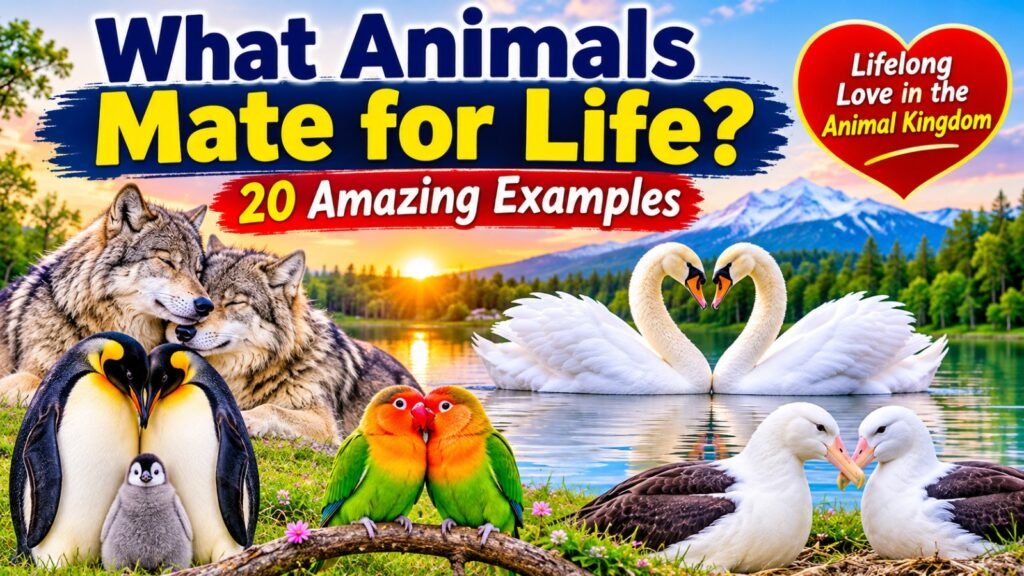
Have you ever wondered whether animals can stay with one partner for their entire lives? In the natural world, relationships are not always temporary. Some animals form strong partnerships that can continue for many years, helping them survive, reproduce, protect their territories, and raise their young. These fascinating behaviors make people curious about what animals mate for life and why certain species prefer long-term partners.
From what animals mate for life graceful swans swimming together across lakes to wolves protecting their families in the wilderness, several animal species are known for forming lasting pair bonds. Some birds return to the same partner during every breeding season, while certain mammals share territories, build homes, and raise offspring together.
However, animal relationships are more complicated than they might appear. A species that forms a long-term partnership does not necessarily remain with the same mate forever. Some animals separate when breeding becomes unsuccessful, while others find a new partner after their original mate dies what animals mate for life.
Scientists use the term social monogamy to describe animals that form lasting social partnerships. Genetic monogamy is different because it refers to individuals reproducing exclusively with one another. These two behaviors do not always occur together what animals mate for life what animals mate for life.
Understanding these differences helps explain why certain animals develop long-lasting relationships and how these partnerships benefit their survival.
In this guide, we explore 20 animals known for long-term pair bonds, including birds, mammals, and other fascinating creatures. We also examine their mating habits, courtship behaviors, family responsibilities, and the scientific reasons behind animal partnerships.
What Does It Mean When Animals Mate for Life?
When people say that animals mate for life, they usually mean that two individuals form a long-term reproductive or social partnership. These animals may remain together across multiple breeding seasons and cooperate in raising their offspring.
Unlike species that regularly search for different mating partners, socially monogamous animals often develop strong connections with one particular individual.
Their partnerships can involve several behaviors, including:
- Sharing a nesting or living area.
- Protecting each other from predators.
- Searching for food together.
- Raising and feeding offspring.
- Defending a shared territory.
- Returning to the same partner during breeding seasons.
However, mating for life does not always what animals mate for life mean complete sexual exclusivity. Researchers have discovered that some animals with long-term social relationships occasionally reproduce with individuals outside their established partnerships.
Social Monogamy vs. Genetic Monogamy
Understanding these two terms is important when researching animals that mate for life.
Social monogamy: Two animals maintain a social partnership, share resources, and may cooperate in raising their young. They can remain together for several breeding seasons.
Genetic monogamy: Two animals reproduce exclusively with each other, meaning their offspring are genetically produced by that particular pair.
For example, prairie voles are well-known for forming what animals mate for life social pair bonds. However, researchers have found that their partnerships are not always genetically exclusive.
This distinction explains why scientists carefully study animal behavior instead of assuming that every long-term partnership represents perfect lifelong fidelity.
What Animals Mate for Life? A Quick Answer
Several animals are famous for maintaining long-term partnerships. These include:
- Swans
- Albatrosses
- Bald eagles
- Wolves
- Prairie voles
- Beavers
- Gibbons
- Lovebirds
- Coyotes
- Dik-diks
- Barn owls
- Red-crowned cranes
- Geese
- French angelfish
- Black vultures
- Jackals
- Marmosets
- Shingleback skinks
- Bat-eared foxes
- California mice
Not every individual from these species stays with one partner for its entire lifetime. Nevertheless, these animals provide interesting examples of long-term pair bonding and cooperative reproductive behavior.
20 Animals That Mate for Life
1. Swans
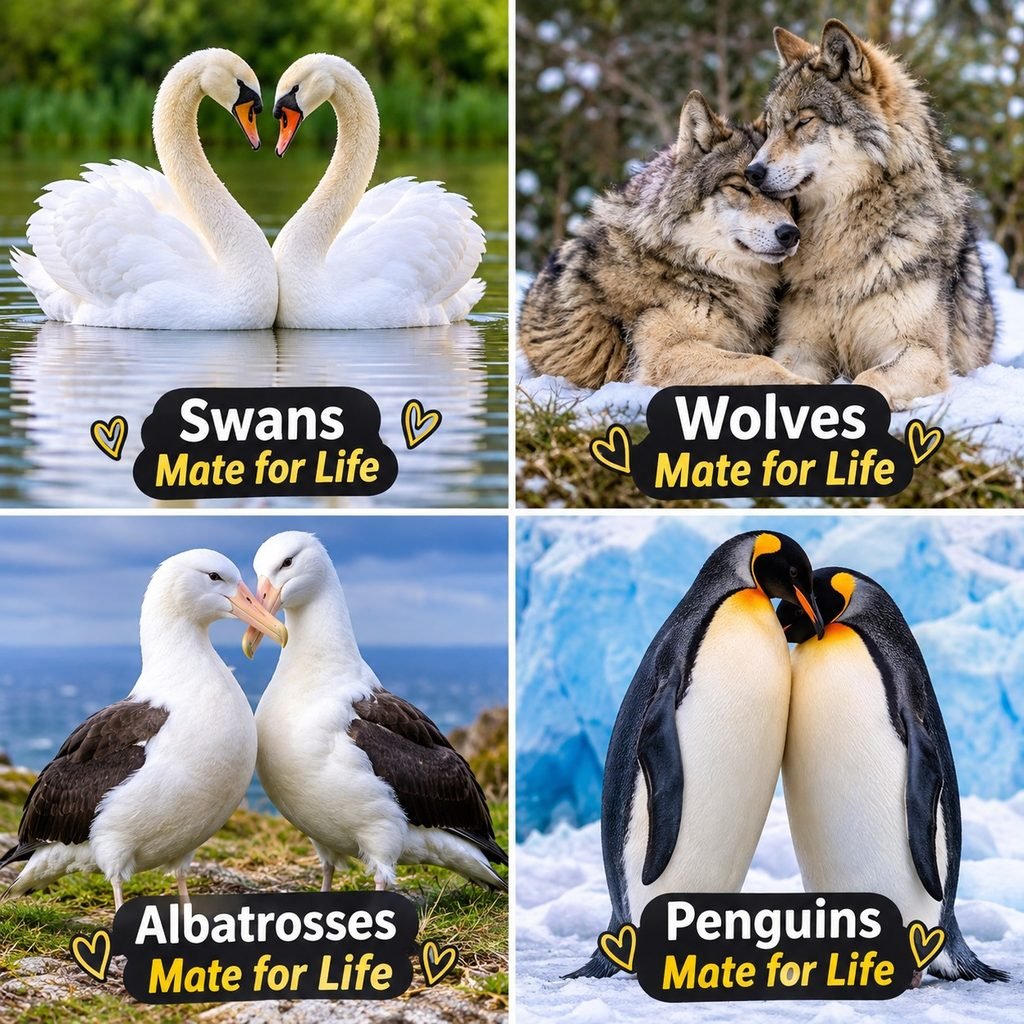
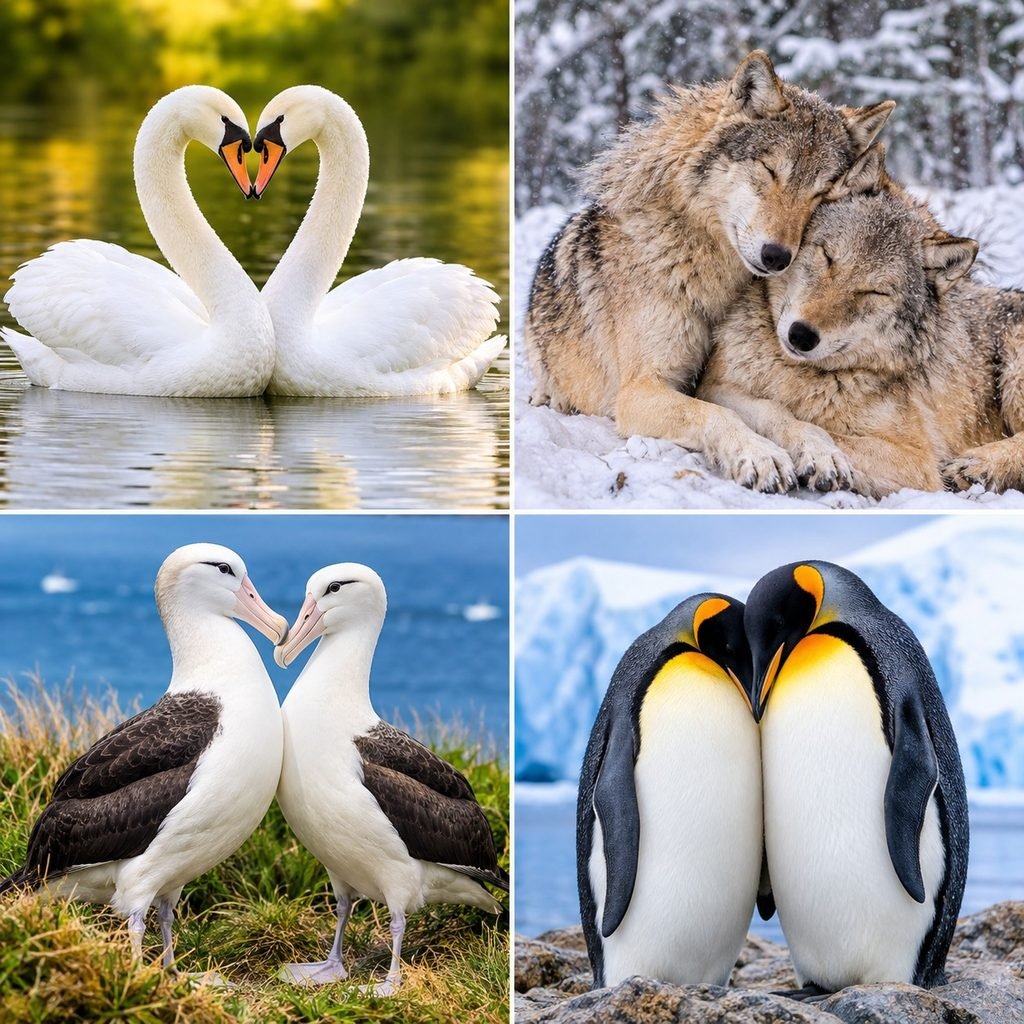
Swans are among the most recognizable animals associated with lifelong partnerships. Their graceful appearance and habit of swimming together have made them popular symbols of love and commitment.
Many swan species form long-term pair bonds and what animals mate for life often return to the same partner during successive breeding seasons. Once a pair establishes a relationship, both birds may work together to select a nesting location, build a nest, and protect their eggs.
The female usually takes the leading role in incubating the eggs, while the male helps defend the nesting area. what animals mate for life After the cygnets hatch, both parents protect their young and help them develop the skills needed to survive.
Swans communicate through body movements, vocalizations, what animals mate for life and coordinated displays. Their partnerships can continue for many years, although separation and new pairings are possible.
Interesting fact: Swans are known for maintaining strong partnerships, but not every swan pair remains together for life.
2. Albatrosses
Albatrosses are remarkable seabirds famous for their enormous wingspans, long-distance flights, and strong relationships with their partners.
Many albatross species form long-term pair bonds that may last for decades. These birds spend much of their lives traveling across oceans, but they return to breeding colonies to meet their partners and reproduce.
Their courtship rituals are particularly interesting. Albatrosses perform coordinated movements involving bill touching, calling, head movements, and other displays. These activities help individuals recognize and establish relationships with potential partners what animals mate for life.
After forming a pair, both birds cooperate in raising their chicks. One parent may remain near the nest while the other travels long distances to search for food what animals mate for life.
Wandering albatrosses are especially well-known for their long-lasting partnerships. However, scientific studies show that pair separation can happen, and the death of a partner can lead to a new relationship what animals mate for life.
Interesting fact: Wandering albatrosses can spend months traveling across the ocean before returning to their breeding colonies.
3. Bald Eagles
Bald eagles are powerful birds of prey that often form long-term relationships with one partner.
They are known for returning to established nesting territories and frequently using the same nests for many years. Both parents participate in important family responsibilities, including incubating eggs, feeding chicks, and protecting their nesting area.
Their courtship behavior can include impressive aerial displays. During these displays, two eagles may fly together, circle through the air, and perform dramatic movements.
Once a pair establishes a successful breeding partnership, the birds may remain together across multiple breeding seasons.
However, a bald eagle may find another partner if its mate dies or the relationship ends.
Their ability to cooperate makes them an excellent example of how long-term partnerships can support successful reproduction.
Interesting fact: Bald eagles can return to and improve the same nest over many breeding seasons.
4. Wolves
Wolves are social mammals that live in family groups called packs. In many wild wolf populations, the breeding pair forms the central reproductive partnership of the group.
A male and female wolf may remain together for several years, working cooperatively to raise pups and protect their territory what animals mate for life.
Both parents contribute to the survival of their young. They help provide food, defend the family, and maintain social relationships within the pack what animals mate for life.
Wolf partnerships are not simply about reproduction. Cooperation allows the family group to hunt, travel, and defend important resources what animals mate for life.
A wolf pair may remain together until one individual dies, although relationships can end because of mortality, environmental pressures, or changes within the population what animals mate for life.
It is also important to understand that wolf pack structures vary. Not every pack follows the same family arrangement.
Interesting fact: Wolves use scent marking, body language, and vocal communication to maintain social relationships and defend their territories what animals mate for life.
5. Prairie Voles
Prairie voles are small rodents that have become famous in scientific research about animal pair bonding.
Unlike many other rodent species, prairie voles frequently form strong social relationships with their partners. After mating, a male and female may share a nest, groom one another, and cooperate in raising their offspring.
Scientists have studied these animals to understand the biological processes involved in attachment and social behavior .
Two important chemicals associated with prairie vole pair bonding are oxytocin and vasopressin. These chemicals participate in several social and behavioral processes, although their effects are complex what animals mate for life.
Prairie voles demonstrate that strong social partnerships can exist even in small mammals.
However, social bonding does not guarantee genetic exclusivity. Some individuals may reproduce outside their established pair relationships.
Interesting fact: Prairie voles are widely used in research exploring the biological foundations of social attachment.
6. Beavers
Beavers are hardworking mammals known for building dams, creating lodges, and changing their surrounding environments.
Many beaver species form long-term partnerships. A male and female may share a territory, maintain a family lodge, and raise several generations of offspring.
Both parents participate in protecting their young and maintaining the family environment. Older offspring may also remain with the family for some time and help care for younger siblings.
Beaver partnerships are especially important because building and maintaining a safe habitat requires considerable effort what animals mate for life.
Their dams create ponds that provide protection and improve access to food resources. Working together helps beaver families maintain these environments what animals mate for life.
Although beavers are associated with long-term pair bonding, relationships can change when a partner dies or other circumstances affect the family what animals mate for life.
Interesting fact: Beaver dams can create wetland habitats that support fish, birds, insects, and many other wildlife species what animals mate for life.
7. Gibbons
Gibbons are small apes that live in the forests of Southeast Asia. They are well known for their impressive swinging movements and distinctive vocal communication what animals mate for life.
Many gibbon species form long-term social partnerships. A male and female may share a territory, travel through the forest together, and raise their offspring.
One of their most fascinating behaviors is singing. Gibbon pairs may perform coordinated vocal duets, with each partner producing different calls.
These duets help communicate territorial what animals mate for life ownership and maintain social relationships.
Gibbons spend considerable time moving through trees in search of fruit and other food. A stable partnership can support cooperation in defending their home range and raising young.
However, gibbon relationships are not identical across all species or populations. Some pairs separate and form new partnerships what animals mate for life.
Interesting fact: Gibbon songs can travel long distances through tropical forests.
8. Lovebirds
Lovebirds are small, colorful parrots native to Africa what animals mate for life and nearby islands. Their name reflects their affectionate social behavior and tendency to form close relationships with partners.
Many lovebird species form strong pair bonds. Partners may sit close together, groom one another, exchange food, and spend considerable time in each other’s company.
Their social behavior is one reason they are popular as companion birds.
In the wild, lovebird pairs cooperate during breeding and nesting. Depending on the species, they use different materials and nesting strategies to prepare a safe place for their eggs.
Their relationships can be long-lasting, although pair bonding should not be confused with a guarantee that every individual will keep one partner forever.
Interesting fact: Lovebirds often use their beaks to gently groom their partners, a behavior called allopreening.
9. Coyotes
Coyotes are adaptable wild canines found across much of North America. what animals mate for life They can survive in forests, grasslands, deserts, and even areas close to human settlements.
Many coyotes form long-term relationships with one partner. A breeding pair may establish a territory, raise pups, and work together to protect their family what animals mate for life.
Both parents can contribute to feeding and caring for their offspring. Their cooperation is particularly important during the early stages of pup development what animals mate for life.
Coyotes communicate through howling, barking, scent marking, and body language.
Their partnerships can remain stable across multiple breeding seasons. what animals mate for life However, their social structure may change when a mate dies or environmental conditions affect the population.
Interesting fact: Coyotes use different types of vocalizations to communicate with family members what animals mate for life and other coyotes.
10. Dik-Diks
Dik-diks are small antelopes that live in parts of eastern and southern Africa.
These animals are particularly interesting because they often form long-term male-female partnerships and maintain relatively small territories.
A dik-dik pair may spend much of its time together, feeding and moving through its shared home range.
They use scent marking to communicate territorial boundaries. Both partners can participate in defending their area against other members of their species.
Their small size makes them vulnerable to predators, so awareness of their surroundings is essential.
Long-term pair bonding is one of the most notable features of their social behavior.
Interesting fact: Dik-diks receive their unusual name from alarm calls that sound similar to the word “dik-dik.”
11. Barn Owls
Barn owls are beautiful nocturnal birds recognized by their heart-shaped facial discs and exceptional hearing.
Many barn owl pairs maintain relationships across multiple breeding seasons, especially when breeding conditions remain suitable.
During courtship, males may provide food to females and perform flight displays. These behaviors help establish and strengthen their breeding partnership.
Once a pair begins nesting, both parents contribute to the survival of their chicks. The female generally spends more time incubating, while the male frequently provides food what animals mate for life.
As the young owls grow, both parents contribute to their development what animals mate for life.
However, not every barn owl pair stays together for life. what animals mate for life Changes in breeding success and partner availability can influence future relationships.
Interesting fact: Barn owls can locate small prey using sound, even in extremely dark environments.
12. Red-Crowned Cranes
Red-crowned cranes are large, elegant birds found mainly in East Asia. They are famous for their elaborate courtship dances and impressive appearance what animals mate for life.
These cranes often form long-term partnerships. Their courtship displays include jumping, bowing, wing movements, and coordinated calls what animals mate for life.
Such behaviors strengthen social bonds and help pairs establish breeding relationships what animals mate for life.
After selecting a nesting location, the birds cooperate in protecting their eggs and raising their chicks.
Both parents contribute to family care, helping young cranes develop the skills necessary for survival.
Red-crowned cranes are also culturally important in several East Asian traditions, where they are associated with longevity and good fortune.
Interesting fact: Red-crowned cranes are among the world’s largest crane species.
13. Geese
Many goose species are known for maintaining long-term relationships with their partners.
A male and female goose may stay together across multiple breeding seasons, returning to suitable nesting areas and raising offspring.
Both parents can play important roles in protecting their eggs and goslings. The male often remains alert to potential threats while the female incubates the eggs what animals mate for life.
After hatching, the parents guide their young toward feeding areas and help them avoid predators.
Geese also use vocal communication and coordinated movements to remain connected while traveling.
Although long-term pair bonding is common in many geese, divorce and new partnerships can occur.
Interesting fact: Some geese travel thousands of kilometers during seasonal migration what animals mate for life.
14. French Angelfish
French angelfish are colorful marine fish found in tropical waters of the western Atlantic and Caribbean.
Unlike many fish species that reproduce through different mating arrangements, French angelfish are often observed swimming in pairs.
These pairs may share territories and move together around coral reefs what animals mate for life.
Their partnership helps them maintain access to food and protect their preferred habitat.
Scientists have observed coordinated reproductive behavior in some paired marine fish. However, the exact duration and genetic exclusivity of partnerships can vary what animals mate for life.
French angelfish demonstrate that pair bonding is not limited to birds and mammals.
Interesting fact: French angelfish often become darker as they mature, with adults displaying striking yellow and black patterns.
15. Black Vultures
Black vultures are social birds that live in groups what animals mate for life and are known for maintaining strong family relationships.
They frequently form long-term partnerships with their mates and may remain together across several breeding seasons.
Unlike some birds that build elaborate nests, what animals mate for life black vultures often use natural spaces such as hollow trees, caves, or protected ground locations.
Both parents participate in caring for their offspring. what animals mate for life They take turns protecting the eggs and feeding the chicks after hatching.
Their cooperative behavior helps young vultures develop before becoming independent.
Black vultures also use group behavior to locate food and respond to potential threats.
Interesting fact: Black vultures have an excellent sense of social awareness and often gather in large groups around feeding opportunities.
16. Jackals
Jackals are members of the dog family and are found in different regions of Africa, Asia, and parts of Europe.
Several jackal species are known for forming strong partnerships between breeding males and females.
A pair may share a territory, hunt together, and raise offspring. Their cooperation helps them protect their young and obtain food.
Jackals use vocal calls, scent marking, and body language to communicate.
In some species, family groups can include older offspring that assist in caring for younger members.
This cooperative family structure demonstrates how long-term partnerships can benefit both adults and their offspring.
Interesting fact: Golden jackals can produce a range of vocal sounds, including howls and yelps.
17. Marmosets
Marmosets are small primates native to South America. They are known for their social behavior, climbing abilities, and cooperative family systems.
Some marmoset species form stable reproductive partnerships in which one breeding female and one or more males participate in raising offspring.
Their family members may share responsibilities such as carrying, grooming, and protecting infants.
Marmosets are especially interesting because fathers what animals mate for life and other group members can play significant roles in infant care.
Their social structure is not always strictly limited to one male what animals mate for life and one female, and different species can have different mating systems.
Nevertheless, certain marmosets provide excellent examples of long-term reproductive partnerships and cooperative parenting.
Interesting fact: Marmoset fathers can carry their newborn what animals mate for life infants for extended periods, helping mothers recover and feed.
18. Shingleback Skinks
Shingleback skinks are unusual reptiles native to Australia. They have thick bodies, short tails, and distinctive rough scales.
They are especially interesting because some individuals return to the same partner during successive breeding seasons.
Unlike many reptiles that have little interaction with their mates after reproduction, shingleback skinks can demonstrate repeated partner recognition.
They may reunite with a familiar partner after spending months apart.
Their relationships do not necessarily represent continuous lifelong companionship, but they are a fascinating example of long-term mate fidelity in reptiles.
Interesting fact: Shingleback skinks give birth to live young rather than laying eggs.
19. Bat-Eared Foxes
Bat-eared foxes are small African mammals recognized by their enormous ears, which help them detect insects underground.
These foxes often form socially monogamous pairs. what animals mate for life A male and female may share a territory and cooperate in raising their offspring.
Both parents can participate in family care, although their individual responsibilities may differ.
Their large ears are especially useful when locating insects such as termites, which make up a major part of their diet.
A stable partnership can help the pair protect its territory and provide care for young foxes.
However, social arrangements may vary depending on local conditions and food availability what animals mate for life.
Interesting fact: Bat-eared foxes can locate insects by listening carefully to movements beneath the soil.
20. California Mice
California mice are small rodents that provide another important example of mammalian pair bonding.
They are known for forming socially monogamous partnerships. After mating, a male and female may share a nest and cooperate in raising their offspring what animals mate for life.
Male California mice can show substantial parental involvement, including grooming, protecting, and caring for pups.
Researchers study these animals to understand the relationship what animals mate for life between social behavior, hormones, and parental care.
Their behavior demonstrates that both parents can contribute to raising young in mammals.
As with other socially monogamous species, social partnerships do not automatically mean that every pair is genetically exclusive.
Interesting fact: California mice are important research animals in studies of paternal care and social behavior.
Birds That Mate for Life
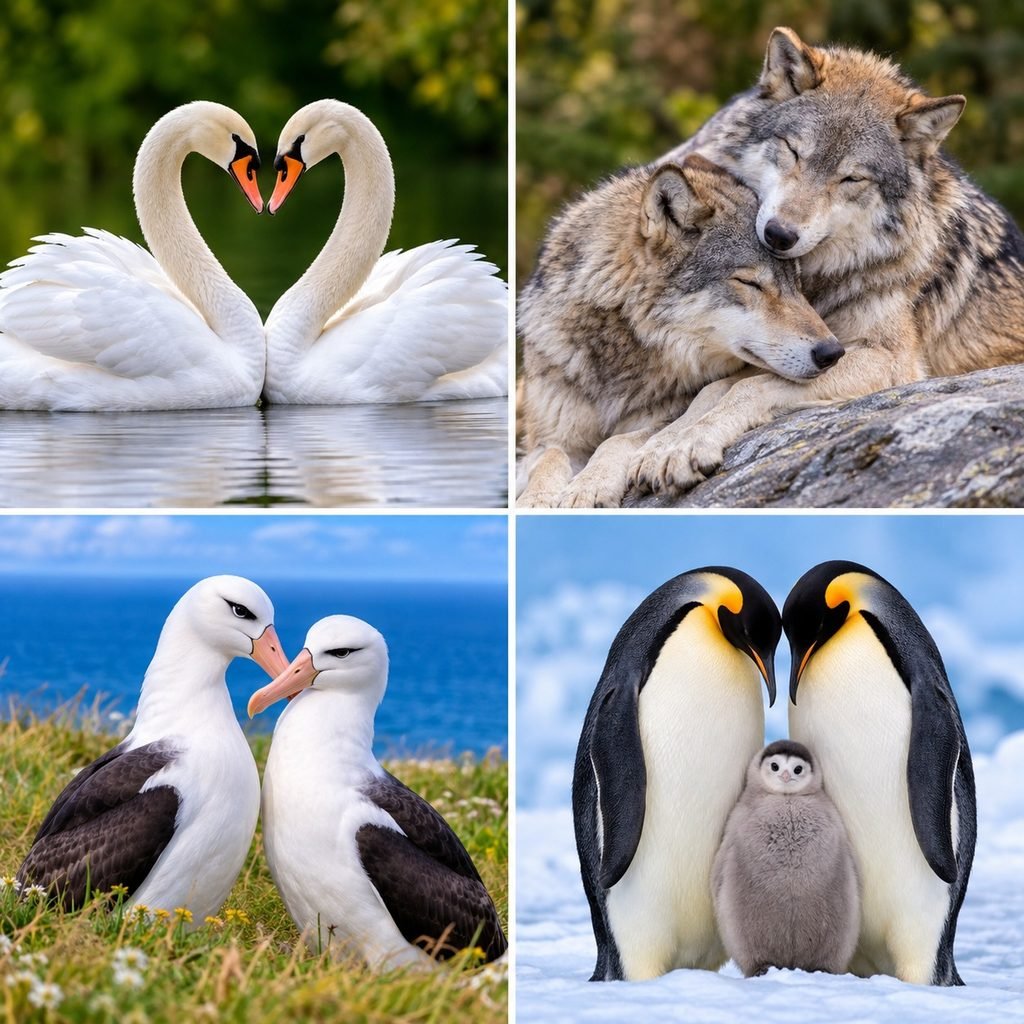
Birds provide some of the best-known examples of long-term animal partnerships.
Many bird species form social pairs that continue across multiple breeding seasons. These relationships can help birds defend territories, build nests, incubate eggs, and raise their young.
Some notable examples include:
- Albatrosses
- Swans
- Bald eagles
- Geese
- Red-crowned cranes
- Lovebirds
- Black vultures
- Some owl species
Birds often rely on cooperation because raising chicks can require considerable time and energy.
A pair that has already established a successful partnership may benefit from familiarity with each other’s behavior.
However, social monogamy is not the same as permanent genetic exclusivity. Some socially monogamous birds may mate outside their established pair.
Mammals That Form Long-Term Partnerships
Long-term pair bonding is less common among mammals than among birds.
Some mammals develop stable partnerships because cooperation what animals mate for life helps them defend territories, obtain food, and care for offspring.
Examples include:
Wolves: Breeding pairs frequently cooperate in raising pups and maintaining family groups.
Beavers: Partners share territories, build lodges, and raise offspring.
Prairie voles: These rodents are well-known for strong social attachment and shared parental care.
Gibbons: Certain species maintain long-term pair relationships and defend territories together.
Coyotes: Many breeding pairs cooperate in raising pups.
Dik-diks: These small antelopes often maintain long-term partnerships and shared territories.
These examples show that mammals can develop lasting social relationships, even though their reproductive systems differ considerably.
Aquatic Animals With Long-Term Partners
Pair bonding is not limited to land animals.
Some marine species and aquatic animals show interesting forms of social cooperation and repeated partnerships.
French angelfish are commonly observed swimming in pairs and maintaining shared territories what animals mate for life.
Certain fish species also demonstrate long-term associations what animals mate for life connected to breeding and territory defense.
However, scientists must examine each species individually before describing its behavior as lifelong monogamy.
For example, some seahorses display strong partnerships during a breeding season, but this does not mean all seahorses remain with one partner throughout their lives.
Understanding these differences helps prevent inaccurate claims about what animals mate for life aquatic animal relationships.
Why Do Some Animals Mate for Life?
There is no single explanation for why animals form long-term partnerships. Scientists believe that several ecological, reproductive, and social factors can influence this behavior.
1. Cooperative Parenting
One major reason is the need to care for offspring.
Some animals produce young that require considerable attention, food, and protection.
When both parents contribute, the young may have better opportunities to survive.
Birds that incubate eggs and feed chicks are particularly good examples of how cooperation can support reproduction.
2. Protection From Predators
Two animals working together may be better at identifying and responding to danger.
One partner can remain alert while the other searches for food or cares for offspring.
This type of cooperation can be useful in environments where predators are common.
3. Shared Territory
Maintaining a territory requires energy and effort.
A stable pair can work together to protect access to food, shelter, and nesting areas.
Wolves, gibbons, and dik-diks demonstrate how territory defense can be associated with long-term partnerships.
4. Better Reproductive Success
Animals that remain with familiar partners may become better coordinated during breeding.
They may understand each other’s behaviors, recognize suitable nesting locations, and cooperate more effectively.
However, this does not mean that staying together is always the best reproductive strategy.
In some circumstances, finding a new partner may provide greater reproductive benefits.
5. Limited Availability of Mates
In certain environments, finding another suitable partner can be difficult.
When individuals are spread across large territories, maintaining an existing relationship may be more practical than searching for a new mate.
This is one reason ecological conditions can influence animal mating systems.
6. Reduced Energy and Time Costs
Finding a new partner requires time and energy.
Animals that already have a stable breeding relationship may avoid some of the costs associated with courtship and mate selection.
They can use more of their available resources for feeding, reproduction, and caring for offspring.
7. Social Attachment and Biological Processes
Some animals show measurable behavioral and physiological responses associated with pair bonding.
Prairie voles, for example, have been studied extensively because of the involvement of oxytocin and vasopressin signaling in their social behavior.
These processes are complex and differ between species.
Scientists continue to investigate how nervous systems, hormones, and environmental experiences contribute to social relationships.
How Do Animals Choose Their Mates?
Animal mate selection involves different behaviors depending on the species.
Some animals use visual displays, while others depend on scent, sound, physical condition, or territory quality.
Courtship Displays
Birds may perform dances, spread their wings, or produce distinctive calls to attract potential partners.
Red-crowned cranes and albatrosses are well-known examples of animals with elaborate courtship displays.
Vocal Communication
Many animals use sounds to communicate during courtship.
Gibbons perform coordinated duets, while wolves use howling and other vocalizations as part of their social communication.
Scent Recognition
Mammals often use chemical signals to recognize other individuals and communicate information.
Scent marking can also help animals establish territories and identify potential partners.
Physical Condition
Health, strength, age, and the ability to obtain resources may influence mate selection.
Individuals may prefer partners that appear capable of contributing to successful reproduction and offspring care.
Familiarity and Previous Experience
Some animals repeatedly select familiar partners.
Previous reproductive success and established social relationships can influence whether a pair remains together or separates.
Do Animals Stay Together After Their Partner Dies?
The answer depends on the species and the individual animal.
Some animals may form another partnership after losing a mate, while others can remain without a partner for an extended period.
Wandering albatrosses, for example, are known for long-term pair bonds. When one partner dies, the surviving bird may eventually seek a new mate.
Wolves can also establish another breeding relationship after the death of a partner.
In prairie voles, the loss of a mate can affect social behavior and the likelihood of forming another pair bond.
It is important not to assume that all animals respond to partner loss in the same way.
Their reactions depend on species-specific biology, social organization, age, reproductive opportunities, and environmental conditions.
Are Animals Really Faithful to One Partner?
This is one of the most interesting questions in animal behavior.
Many animals form long-term social partnerships, but researchers have discovered that social monogamy does not always equal sexual exclusivity.
For example, a bird pair may share a nest and raise chicks together while one or both individuals occasionally reproduce with another bird.
Scientists use genetic testing to identify the biological parents of offspring.
This research has shown that extra-pair reproduction occurs in many species that were traditionally described as monogamous.
Therefore, it is more accurate to say that certain animals maintain long-term pair bonds rather than assuming every pair remains completely faithful.
Animals That Look Loyal but Do Not Always Mate for Life
Some animals are commonly described as lifelong partners, but their actual mating behavior is more complicated.
Penguins
Many penguin species form seasonal breeding partnerships and may reunite with the same mate in later seasons.
However, partner changes can occur, and behavior varies among species.
Seahorses
Some seahorses form recognizable pair relationships and perform coordinated courtship rituals.
These partnerships may be associated with particular breeding periods rather than permanent lifelong bonds.
Flamingos
Flamingos may form social partnerships during breeding periods, but their mating arrangements are not necessarily lifelong.
Prairie Voles
Prairie voles are famous for pair bonding, but their relationships are not always genetically exclusive.
Swans
Swans often maintain long-term partnerships, but some individuals separate or find new mates.
These examples demonstrate why understanding the difference between social and genetic monogamy is important.
Benefits of Lifelong Pair Bonding
Long-term partnerships can provide several advantages to animals, depending on their environment and reproductive needs.
Better Care for Offspring
When two parents cooperate, they can share responsibilities such as feeding, protection, and nest maintenance.
Familiarity Between Partners
Partners that have lived together for several breeding seasons may become familiar with each other’s behavior.
This familiarity can improve coordination during important activities.
Shared Territory Defense
Two animals may be more effective at protecting a home range than one individual working alone.
Reduced Courtship Costs
Maintaining an established partnership can reduce the time and energy required to find another mate.
Improved Family Cooperation
Some species develop family groups in which parents and older offspring cooperate in raising younger members.
This arrangement can improve the survival chances of offspring.
Interesting Facts About Animals That Mate for Life
Here are some interesting facts about long-term animal partnerships:
- Wandering albatrosses can maintain pair bonds for many years.
- Swans often return to the same partner during successive breeding seasons.
- Prairie voles are widely studied in research on social attachment.
- Wolves often raise pups as part of a family group.
- Gibbons use coordinated songs to communicate with partners and neighboring groups.
- Lovebirds frequently groom their partners.
- Beavers can cooperate in maintaining dams and family lodges.
- Red-crowned cranes perform elaborate courtship dances.
- Some shingleback skinks reunite with familiar partners during breeding seasons.
- California mice are studied for their strong examples of paternal care.
- Many bird species are socially monogamous, but extra-pair reproduction is possible.
- A surviving animal may form another partnership after losing its mate.
How Scientists Study Animal Pair Bonding
Scientists use several methods to understand how animals form and maintain partnerships.
Long-Term Wildlife Observation
Researchers observe animals over multiple breeding seasons to determine whether the same individuals remain together.
They may use identification bands, tags, photographs, and tracking equipment.
Genetic Testing
DNA analysis helps scientists identify the biological parents of offspring.
This allows researchers to distinguish social partnerships from genetic monogamy.
Behavioral Research
Scientists record behaviors such as grooming, nest building, food sharing, territorial defense, and parental care.
These observations provide evidence about the strength and duration of pair relationships.
Hormonal and Neurological Research
Some studies examine how hormones and brain activity relate to social attachment.
Prairie voles are particularly important in this field because their pair-bonding behavior can be studied under controlled conditions.
Environmental Research
Scientists also investigate how food availability, habitat conditions, population density, and human activities influence the stability of animal partnerships.
Together, these methods provide a more accurate understanding of animal relationships.
Frequently Asked Questions About What Animals Mate for Life?
1. What animals mate for life?
Several animals are known for forming long-term partnerships, including swans, albatrosses, wolves, beavers, prairie voles, gibbons, lovebirds, and some crane species. However, lifelong partnerships are not guaranteed for every individual.
2. Which animal is most famous for mating for life?
Swans and albatrosses are among the most famous examples. Both are associated with long-term pair bonding and often maintain relationships across multiple breeding seasons.
3. Do wolves mate for life?
Many wolves form long-term partnerships with one breeding mate. These pairs often cooperate in raising pups and maintaining their territories. Their partnerships can end if one partner dies or other circumstances disrupt the pair what animals mate for life.
4. Do swans really stay together forever?
Swans frequently form long-lasting relationships and may remain together for many years. However, some pairs separate or find new partners, so lifelong pairing is not universal.
5. Do penguins mate for life?
Some penguins repeatedly reunite with the same partner during breeding seasons. However, many penguin species form seasonal partnerships, and partner changes can occur.
6. Are albatrosses loyal to one partner?
Albatrosses are famous for strong, long-term pair bonds. Some partnerships last for decades, although divorce and new pairings have also been documented.
7. Do animals feel love like humans?
Scientists can study animal attachment through behavior, communication, and biological responses. However, it is difficult to determine whether an animal experiences love in exactly the same way humans do.
8. Why do some animals have only one mate?
Long-term partnerships can help animals cooperate in raising offspring, defend territories, share resources, and reduce the costs of finding new partners.
9. Do animals find another partner after their mate dies?
Some animals form new relationships after losing a mate, while others may remain without a partner. The response depends on the species and individual circumstances.
10. Are birds more likely to mate for life than mammals?
Social monogamy is much more widespread among birds than mammals. However, many bird species also change partners, and social monogamy does not necessarily mean genetic exclusivity.
11. What mammal mates for life?
Wolves, beavers, prairie voles, certain gibbons, coyotes, and dik-diks are examples of mammals known for long-term pair bonding.
12. Which animal stays with its partner the longest?
Some wandering albatross partnerships can last for decades. Their long lifespan and repeated breeding relationships make them remarkable examples of long-term animal pair bonding.
13. Do animals get sad when their partner dies?
Some animals show behavioral changes after losing a familiar partner, including changes in social interaction and activity. However, interpreting these behaviors as human-like sadness requires caution.
14. Are all monogamous animals faithful?
No. Social monogamy means that animals maintain a social partnership. It does not necessarily mean they reproduce exclusively with each other.
15. Is lifelong mating common in nature?
No. Many animal species reproduce with multiple partners. Long-term social monogamy is more common in birds than in mammals, and permanent lifelong partnerships are less common than popular descriptions suggest.
Conclusion
The natural world contains many fascinating examples of animals that form strong and lasting partnerships. From swans and albatrosses to wolves, beavers, prairie voles, and gibbons, different species demonstrate how cooperation can support reproduction, family life, and survival.
These animals do not all maintain relationships in exactly the same way. Some remain together for decades, others reunite during breeding seasons, and some eventually form new partnerships.
The most important distinction is between social monogamy and genetic monogamy. Animals can share territories, raise offspring, and maintain long-term relationships without necessarily reproducing exclusively with one another.
Understanding these differences makes animal behavior even more interesting. Rather than simply describing certain species as loyal, scientists examine their behavior, genetics, and environmental conditions to understand why long-term partnerships develop.
Ultimately, animals that mate for life demonstrate the important role of cooperation in nature. Their relationships provide valuable insights into reproduction, social behavior, parental care, and the many different ways wildlife survives in a changing world.