

Introduction
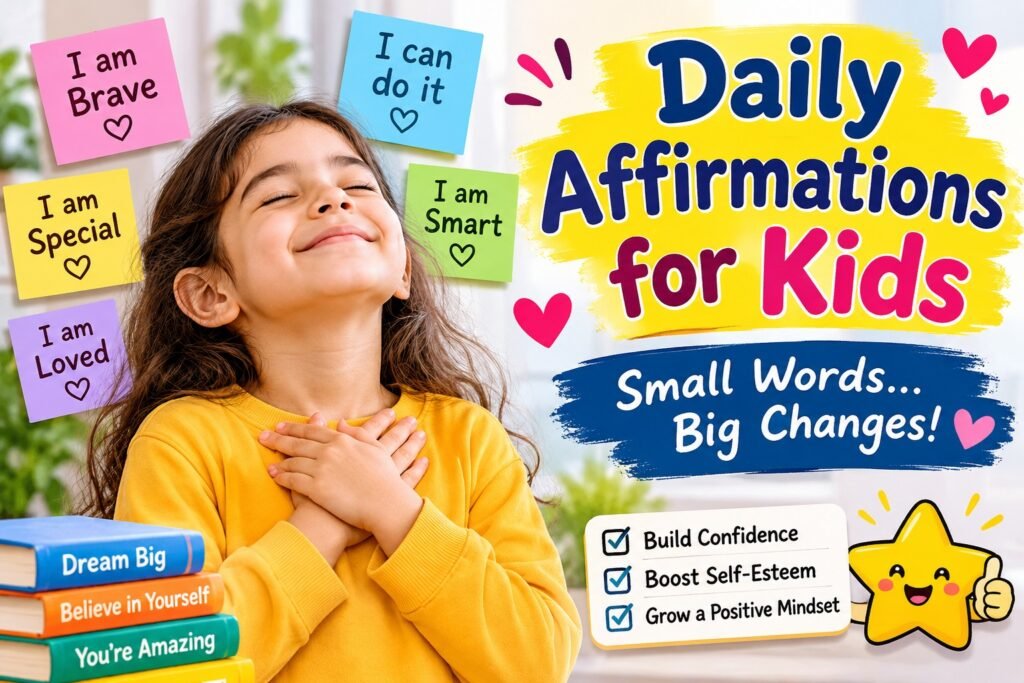
Daily affirmations for kids are simple, positive statements that help children develop confidence, self-belief, emotional awareness, and a healthy mindset. These encouraging words remind children that they are valuable, capable of learning, and worthy of love and kindness.
Childhood is an important stage of emotional and personal development. daily affirmations for kids During these years, children experience new challenges, build friendships, learn academic skills, and discover more about themselves. Sometimes, they may feel nervous about school, disappointed after making mistakes, or uncertain about their abilities. Positive affirmations can give parents and teachers a simple way to encourage children during these moments daily affirmations for kids daily affirmations for kids.
Whether your child is a toddler, preschooler, elementary student, or teenager, age-appropriate affirmations can become a meaningful part of their daily routine. daily affirmations for kids They can be spoken in the morning, before school, during classroom activities, or at bedtime.
The purpose of affirmations is not to make children believe that everything will always be easy or perfect. Instead, they encourage children to recognize their strengths, accept their feelings, daily affirmations for kids and understand that mistakes and challenges are normal parts of growing.
In this guide, you will discover more than 150 daily affirmations for kids, including morning affirmations, bedtime affirmations, confidence-building statements, school affirmations, growth mindset affirmations, and positive self-talk examples.
You will also learn how to introduce affirmations into your child’s routine, choose suitable statements for different ages, and encourage positive thinking without creating unrealistic expectations daily affirmations for kids.
What Are Daily Affirmations for Kids?
Daily affirmations for kids are short, encouraging statements that children can repeat to remind themselves of their positive qualities, abilities, and personal values.
These statements are usually written in simple language that children can understand and remember. For example:
- I am loved.
- I can learn new things.
- I am brave.
- My feelings matter.
- I can try again.
- I am proud of myself.
Unlike general praise, affirmations encourage children to develop their own positive inner voice. Instead of depending entirely on someone else to tell them they are doing well, children gradually learn to recognize their efforts, strengths, and personal worth daily affirmations for kids.
Positive affirmations can also help parents introduce important ideas about emotional wellness, kindness, patience, resilience, and self-acceptance daily affirmations for kids.
How Do Affirmations Work?
Affirmations work as a form of intentional positive self-talk. When children regularly hear and practice supportive language, they have opportunities to become more familiar daily affirmations for kids with encouraging ways of thinking about themselves.
For example, a child who struggles with mathematics might think:
“I am bad at math.”
A parent or teacher can help the child practice a more balanced statement:
“Math is challenging for me, but I can learn with practice.”
The second statement does not deny the difficulty. Instead, it encourages the child to see learning as a process and recognize that improvement is possible daily affirmations for kids.
Daily affirmations are not a magical solution to every childhood challenge. Their usefulness depends on how they are introduced, whether the statements feel believable to the child, and whether they are supported by positive relationships and practical actions daily affirmations for kids .
Why Are Positive Affirmations Important for Children?
Positive affirmations can support children’s emotional development when used consistently and realistically. They provide parents and teachers with opportunities to encourage healthy self-talk and help children recognize their personal strengths daily affirmations for kids.
1. Building Self-Confidence
Children often compare themselves with classmates, siblings, and friends. They may feel discouraged when someone else performs better or learns a skill more quickly daily affirmations for kids.
Confidence affirmations remind children that their abilities can develop over time daily affirmations for kids.
Statements such as “I can learn new things” and “I believe in myself” encourage children to approach unfamiliar situations with greater willingness daily affirmations for kids.
2. Supporting Healthy Self-Esteem
Self-esteem involves how children understand and value themselves.
Affirmations such as “I am worthy of love” and “I matter just as I am” communicate that a child’s worth is not determined by grades, appearance, popularity, or achievements daily affirmations for kids.
This is especially important when children make mistakes or experience disappointment.
3. Encouraging a Growth Mindset
A growth mindset encourages children to understand that skills and abilities can improve through learning, practice, feedback, and effort.
Instead of saying, “I cannot do this,” children can practice saying, “I cannot do this yet.”
The word “yet” creates room for learning and future improvement daily affirmations for kids.
4. Developing Emotional Awareness
Children experience many emotions, including happiness, sadness, anger, fear, excitement, and frustration.
Affirmations such as “My feelings are important” and “It is okay to feel sad” help children understand that emotions are normal.
They can also encourage children to communicate their feelings instead of hiding them.
5. Encouraging Resilience
Resilience means learning to cope with difficulties and recover after setbacks.
Affirmations such as “I can try again” and “I can ask for help when I need it” remind children that they have different ways to respond to challenges daily affirmations for kids.
Resilience does not mean children must handle every problem independently. Knowing when to seek support is also an important life skill daily affirmations for kids.
6. Promoting Kindness and Positive Relationships
Affirmations can encourage children to think about how they treat themselves and others.
Statements such as “I can be kind” and “I respect other people’s feelings” introduce positive values that can support healthy friendships and classroom relationships daily affirmations for kids.
7. Supporting a Positive Learning Environment
Teachers can use affirmations during classroom meetings, morning routines, and group activities.
When children hear encouraging language that focuses on effort, curiosity, and cooperation, it can help establish a supportive classroom atmosphere daily affirmations for kids.
150+ Daily Affirmations for Kids
The following positive affirmations are organized into categories so parents, teachers, and caregivers can easily select statements that match a child’s needs.
Children do not need to repeat every affirmation every day. Choosing a few meaningful statements is often more practical than trying to memorize a long list.
1. Short and Simple Affirmations for Kids
Short affirmations are especially useful for young children who are learning to express themselves and remember new phrases.
- I am loved.
- I am special.
- I am kind.
- I am brave.
- I am strong.
- I am helpful.
- I am important.
- I am creative.
- I am learning.
- I am growing.
- I am enough.
- I am unique.
- I am thoughtful.
- I am friendly.
- I am proud of myself.
- I can do my best.
- I can try again.
- I can learn.
- I can ask for help.
- I believe in myself.
These simple affirmations can be repeated during breakfast, while getting dressed, or before beginning a new activity.
Parents can also turn them into a fun activity by asking children to choose their favorite statement each morning daily affirmations for kids.
2. Confidence and Self-Esteem Affirmations for Kids
Confidence affirmations encourage children to recognize their abilities, appreciate their individuality, and feel comfortable being themselves daily affirmations for kids.
- I believe in my abilities.
- I am proud of who I am.
- I have wonderful qualities.
- I can do difficult things with practice.
- I deserve love and respect.
- I am valuable just as I am.
- I can share my ideas confidently.
- I am learning to trust myself.
- I have the courage to try new things.
- I do not need to be perfect.
- I can celebrate my achievements.
- I am proud of my progress.
- I have something special to offer.
- I can make good choices.
- I can stand up for myself respectfully.
- I am comfortable being myself.
- I can learn from my experiences.
- I have strengths and talents.
- I deserve to feel good about myself.
- I am becoming more confident every day.
Parents can reinforce these affirmations by noticing children’s efforts and personal qualities daily affirmations for kids.
For example, instead of saying only “You are smart,” a parent might say, “You worked carefully on that puzzle and kept trying even when it was difficult.”
This type of encouragement helps children connect confidence with their own actions and experiences daily affirmations for kids.
3. Morning Affirmations for Kids
Morning affirmations can help children begin the day with encouraging thoughts and a positive sense of purpose.
- Today is a new opportunity to learn.
- I am ready to explore new things.
- I can make today meaningful.
- I will treat myself with kindness.
- I can handle today’s challenges one step at a time.
- I am excited to discover something new.
- I can make thoughtful choices today.
- I will do my best without needing to be perfect.
- I can share kindness with others.
- I am ready to learn and grow.
- I can ask questions when I am curious.
- I can take my time and do my best.
- I can be proud of my effort today.
- I will give myself opportunities to succeed.
- I can make today a good day.
How to Use Morning Affirmations
Parents can introduce morning affirmations through a simple routine:
- Choose one or two affirmations.
- Say them together while getting ready.
- Ask the child how the statement makes them feel.
- Encourage the child to select their own affirmation.
- Connect the affirmation with a practical goal for the day.
For example, a child might choose “I can ask questions when I am curious” before going to school.
This gives the affirmation a meaningful purpose rather than making it a phrase that must be repeated without understanding daily affirmations for kids.
4. Bedtime Affirmations for Kids
Bedtime affirmations can provide a calm opportunity for children to reflect on their day, recognize their efforts, and prepare for rest.
- I am safe and loved.
- I am proud of what I learned today.
- I can let go of today’s worries.
- I deserve peaceful rest.
- My body needs sleep to grow.
- I can forgive myself for mistakes.
- Tomorrow is another opportunity.
- I am grateful for the people who care about me.
- I can feel proud of small achievements.
- I am learning every day.
- I can rest without worrying about being perfect.
- My feelings are important.
- I am loved even when I make mistakes.
- I can relax and take slow breaths.
- I deserve kindness and comfort.
Creating a Peaceful Bedtime Routine
A bedtime affirmation routine does not need to be complicated daily affirmations for kids.
Parents can spend a few quiet minutes talking with their child about the day.
Useful questions include:
- What made you smile today?
- What did you learn?
- What was difficult?
- What are you proud of?
- What would you like to try tomorrow?
After the conversation, the child can choose an affirmation such as “I am proud of what I learned today.”
The goal is to create a supportive environment where children feel comfortable sharing their experiences daily affirmations for kids.
5. School and Learning Affirmations for Kids
School can introduce children to new academic challenges, social experiences, and expectations daily affirmations for kids.
School affirmations can encourage children to approach learning with curiosity and recognize that asking questions is a valuable part of education.
- I am capable of learning new things.
- I can ask my teacher for help.
- I can learn from my mistakes.
- I am curious and creative.
- I can focus on one task at a time.
- I can take my time when learning.
- I am proud of my hard work.
- I can share my ideas with confidence.
- I can learn at my own pace.
- I can practice until I improve.
- I can work with others.
- I can be a good friend to my classmates.
- I can solve problems step by step.
- I can stay curious when something is difficult.
- I can celebrate my progress.
- I can learn something valuable every day.
- I can listen and learn from others.
- I can try different ways to solve a problem.
- I can make mistakes and keep learning.
- My effort matters.
Why School Affirmations Matter
Children sometimes believe that getting an answer wrong means they are not intelligent.
School affirmations can introduce a healthier understanding of learning.
For example:
Instead of: “I am not good at reading.”
Try: “I am practicing reading, and I can improve with time.”
Instead of: “I always get things wrong.”
Try: “Mistakes help me understand what I need to practice.”
These statements encourage children to view learning as an ongoing process.
6. Growth Mindset Affirmations for Kids
Growth mindset affirmations focus on effort, learning, patience, curiosity, and improvement.
- I can improve with practice.
- I do not need to know everything today.
- Every mistake can teach me something.
- I can keep going when things get challenging.
- I can learn new skills step by step.
- I can change my approach when something does not work.
- I am capable of making progress.
- Challenges help me discover what I can learn.
- I can be patient with myself.
- I can learn from helpful feedback.
- I can celebrate progress instead of perfection.
- I can try a different strategy.
- I can turn challenges into learning opportunities.
- I can become better through practice.
- I am always learning something new.

Growth Mindset vs. Fixed Mindset
| Fixed Mindset Statement | Growth Mindset Affirmation |
|---|---|
| I cannot do this. | I can learn how to do this. |
| I am bad at math. | I am practicing math skills. |
| I made a mistake. | I can learn from my mistake. |
| This is too difficult. | I can try one step at a time. |
| I am not talented. | I can develop my skills. |
| I will never understand. | I can ask questions and keep learning. |
Parents and teachers should remember that a growth mindset does not mean children must always work harder without support.
Sometimes children need a different explanation, additional practice, rest, encouragement, or help from an adult.
7. Kindness and Friendship Affirmations for Kids
Kindness affirmations help children understand the importance of empathy, respect, cooperation, and positive relationships.
- I can be kind to myself and others.
- I respect other people’s feelings.
- I can listen when someone needs to talk.
- I can include others in my activities.
- I can be a thoughtful friend.
- I can share when I feel comfortable.
- I can apologize when I make a mistake.
- I can use kind words.
- I can respect different opinions.
- I can help someone who needs support.
- I can celebrate other people’s achievements.
- I can make new friends at my own pace.
- I can stand up for kindness.
- I can respect people’s boundaries.
- I can make a positive difference through small actions.
Teaching Kindness Through Affirmations
Affirmations become more meaningful when children can connect them with real situations.
For example, after saying “I can include others,” parents can discuss what inclusion looks like on the playground.
Children might learn to invite someone to join a game, listen to a classmate, or respect another person’s choice.
The purpose is to help children understand kindness as an action, not simply a word.
8. Emotional Wellness Affirmations for Kids
Emotional wellness affirmations encourage children to recognize their feelings and develop healthy ways to respond to different situations.
- My feelings are important.
- It is okay to feel sad sometimes.
- I can talk about my feelings.
- I can take a break when I feel overwhelmed.
- I can ask a trusted adult for help.
- I can take slow breaths when I feel worried.
- I can feel nervous and still try.
- I can express my feelings respectfully.
- I do not need to hide my emotions.
- I can learn ways to calm myself.
- I can take things one moment at a time.
- I can be patient with myself.
- I can make space for my feelings.
- I can find support when I need it.
- I am learning how to handle difficult emotions.
Affirmations for Children Who Feel Worried
Some children experience nervousness before school, social activities, performances, or unfamiliar situations.
Parents can introduce affirmations that acknowledge these feelings rather than dismiss them.
Examples include:
- I can feel worried and still take a small step.
- I can ask someone I trust for support.
- I can take a slow breath and pause.
- I do not have to solve everything right now.
- I can try again when I feel ready.
These statements should be used alongside reassurance, listening, and practical support.
If a child’s anxiety is persistent, intense, or interfering with everyday life, parents should consider seeking guidance from a qualified healthcare or mental health professional.
9. Affirmations for Toddlers and Preschoolers
Toddlers and preschoolers benefit from short statements with familiar words and simple meanings.
- I am loved.
- I can try.
- I am helpful.
- I am learning.
- I can use gentle hands.
- I can share my feelings.
- I can ask for help.
- I am a good helper.
- I can take turns.
- I am growing every day.
Parents can use gestures, pictures, toys, or simple songs to make affirmations more engaging.
For example, a parent can say “I am loved” while giving a comforting hug, if the child welcomes physical affection.
Children should never be forced to hug, speak, or repeat an affirmation when they are uncomfortable.
10. Affirmations for Older Kids and Preteens
Older children may prefer affirmations that sound natural, independent, and connected to their real experiences.
- I can make decisions that reflect my values.
- I can learn from constructive feedback.
- I can set realistic goals.
- I can respect my own boundaries.
- I can handle change one step at a time.
- I can be proud of my individuality.
- I can speak up respectfully.
- I can balance effort with rest.
- I can ask for support without feeling ashamed.
- I can define success in a healthy way.
Older children can also be encouraged to write their own affirmations.
This makes the activity more personal and helps them identify the areas where they want encouragement.
Daily Affirmations for Kids by Age
Different ages require different language, examples, and levels of understanding.
Affirmations for Toddlers
Toddlers are beginning to develop language, independence, and emotional awareness.
Keep affirmations short and connected to everyday experiences.
Examples:
- I am loved.
- I can try.
- I am safe.
- I can ask for help.
- I am learning.
Parents should focus on warmth, repetition, and supportive interactions rather than expecting toddlers to understand abstract ideas.
Affirmations for Preschoolers
Preschool children are developing social skills, imagination, and independence.
Useful affirmations include:
- I can make new friends.
- I can use kind words.
- I can try something new.
- I can learn from mistakes.
- I can tell someone how I feel.
These affirmations can be included in playtime, storytelling, and classroom activities.
Affirmations for Elementary School Children
Elementary students often experience increasing academic and social expectations.
Examples include:
- I can learn at my own pace.
- I can ask questions when I need help.
- I can handle challenges step by step.
- I can be proud of my effort.
- I can respect myself and others.
Parents can connect these affirmations with homework, sports, reading, and friendship experiences.
Affirmations for Preteens
Preteens may face more complex social pressures, changing interests, and growing independence.
Examples include:
- I can be myself without comparing my journey to others.
- I can learn from difficult experiences.
- I can make choices that support my well-being.
- I can express my opinions respectfully.
- I can ask for help when I need it.
Allow preteens to choose or rewrite their affirmations so the statements feel authentic.
How to Create a Daily Affirmation Routine for Kids
A daily affirmation routine can be simple, flexible, and enjoyable.
Parents do not need to create a long schedule or require children to repeat dozens of statements.

Step 1: Choose a Suitable Time
Select a time when your child feels relatively comfortable and relaxed.
Possible options include:
- During breakfast
- While getting ready for school
- Before starting homework
- During classroom morning meetings
- Before bedtime
Consistency can make the activity easier to remember.
Step 2: Choose Two or Three Affirmations
Start with a small number of statements.
For example:
“I am loved.”
“I can learn new things.”
“I can ask for help.”
A few meaningful affirmations are often easier for children to remember than a large list.
Step 3: Let Children Choose
Give children opportunities to select their favorite statements.
You can ask:
“Which affirmation would you like to use today?”
Allowing children to make choices supports independence and personal involvement.
Step 4: Explain the Meaning
Make sure children understand what the affirmation means.
For example, explain that “I can try again” does not mean they must keep doing something when they are exhausted.
It means they can take a break, seek help, and return to the challenge when they are ready.
Step 5: Connect Affirmations With Actions
Affirmations become more practical when connected with everyday behavior.
For example:
Affirmation: “I can be kind.”
Action: Invite a classmate to join a game.
Affirmation: “I can learn from mistakes.”
Action: Review a difficult homework question with a parent.
Affirmation: “I can ask for help.”
Action: Talk to a teacher when a lesson is confusing.
Step 6: Keep the Routine Positive
Avoid turning affirmations into a test or punishment.
If a child does not want to repeat a statement, listen to their reasons.
The goal is to create a positive experience, not another responsibility that makes children feel pressured.
Step 7: Review and Adjust
Children’s needs change as they grow.
An affirmation that feels helpful one month may not feel meaningful later.
Parents can regularly ask which statements they enjoy and whether they would like to create new ones.
How Parents Can Encourage Positive Self-Talk
Parents play an important role in helping children develop a healthy inner voice.
Model Positive Self-Talk
Children often learn by observing adults.
Parents can demonstrate realistic self-encouragement during everyday challenges.
For example:
“I made a mistake, but I can learn from it.”
“I am feeling frustrated, so I will take a short break.”
“I do not know the answer yet, but I can find out.”
These examples show children that positive self-talk is not about pretending to be perfect.
Praise Effort and Specific Actions
Instead of giving only general praise, describe what the child did.
Examples:
- “You kept practicing even when the task was difficult.”
- “You asked a thoughtful question.”
- “You were patient with your friend.”
- “You tried a different way to solve the problem.”
Specific encouragement helps children recognize the actions and strategies they can use again.
Respect Children’s Feelings
If a child says, “I feel sad,” avoid immediately responding with “You should be happy.”
Instead, acknowledge the feeling:
“I can see that you are sad. Would you like to tell me what happened?”
After listening, you can introduce an affirmation such as “My feelings are important.”
This helps children understand that positive thinking and difficult emotions can exist together.
How Teachers Can Use Affirmations in the Classroom
Teachers can introduce daily affirmations as part of a supportive classroom environment.
Morning Classroom Affirmations
Begin the school day with a short statement that students can read together or select individually.
Examples:
- I am ready to learn.
- I can respect my classmates.
- I can ask questions.
- I can learn from mistakes.
Affirmation Wall
Create a classroom display featuring encouraging statements.
Students can contribute their own affirmations and select one that feels relevant to their day.
The display should include different types of statements, such as learning, kindness, confidence, and emotional awareness.
Affirmation Journals
Older students can keep a simple journal containing:
- One affirmation
- One personal strength
- One learning goal
- One thing they are proud of
This activity encourages reflection without requiring students to share personal information publicly.
Group Activities
Teachers can invite students to discuss affirmations through stories, drawings, or role-playing.
For example, students can explore how a character responds to a difficult challenge and identify supportive statements the character might use.
Teachers should avoid requiring students to disclose private emotions or participate in ways that make them uncomfortable.
Printable Daily Affirmations for Kids
Printable affirmations can help parents and teachers display encouraging statements in places where children regularly see them.
Popular printable formats include:
- Affirmation cards
- Classroom posters
- Morning routine charts
- Bedtime affirmation sheets
- Positive self-talk worksheets
- Confidence-building journals
- Daily affirmation calendars
How to Make Printable Affirmation Cards
Creating affirmation cards is simple.
- Select 10 to 20 age-appropriate affirmations.
- Write each affirmation on a separate card.
- Use large, readable text.
- Add simple illustrations or symbols.
- Place the cards in a box or display them on a wall.
- Allow children to select a card each day.
For younger children, pictures can help communicate the meaning of each statement.
For older children, simple designs and personal writing options may be more appealing.

Common Mistakes to Avoid When Using Affirmations
Affirmations should support children’s emotional development without creating pressure or unrealistic expectations.
1. Forcing Children to Repeat Statements
Children should not be required to repeat affirmations when they feel uncomfortable.
Instead, offer choices and explain the purpose of the activity.
2. Using Unrealistic Statements
Statements such as “I am the best at everything” may create unnecessary pressure.
More realistic alternatives include:
“I can improve with practice.”
“I have strengths and can keep learning.”
3. Ignoring Negative Feelings
Positive affirmations should not be used to dismiss sadness, fear, anger, or disappointment.
Children need opportunities to express difficult emotions and receive support.
4. Focusing Only on Achievements
Affirmations should recognize personal worth, effort, kindness, and learning—not just winning, getting high grades, or performing well.
5. Comparing Children
Avoid statements that make one child seem better than another.
For example, replace “I am smarter than everyone” with “I can learn in my own way.”
6. Expecting Immediate Results
Affirmations are not a quick fix.
Children may need time, consistent encouragement, supportive relationships, and practical help to develop confidence and healthier self-talk.
What Does Research Say About Positive Affirmations for Kids?
Positive self-talk and supportive language are commonly discussed in child development and educational settings.
However, it is important to distinguish between encouraging children and making exaggerated claims about affirmations.
Research on self-affirmation and self-talk includes different populations, methods, and outcomes. Findings from adult studies should not automatically be treated as proof that repeating affirmations will produce the same effects in every child.
For children, affirmations are best understood as one possible supportive practice within a broader environment that includes:
- Warm and responsive relationships
- Opportunities to learn and practice
- Emotional validation
- Constructive feedback
- Safe and supportive environments
- Access to help when challenges become difficult
Affirmations may be helpful when they feel believable and connect with children’s real experiences.
For example, “I can take one small step” may feel more useful to a worried child than “Nothing can ever go wrong.”
The most important principle is to use affirmations as encouragement rather than as a replacement for listening, teaching, or practical support.
Frequently Asked Questions About Daily Affirmations for Kids
1. What are the best daily affirmations for kids?
Some useful daily affirmations for kids include “I am loved,” “I can learn new things,” “I believe in myself,” “My feelings matter,” and “I can try again.”
The best affirmations are age-appropriate, realistic, and meaningful to the child.
2. How many affirmations should a child say each day?
There is no fixed number that every child must follow.
Parents can begin with one to three affirmations and adjust the routine according to the child’s interest and comfort.
A few meaningful statements are often easier to remember and understand.
3. At what age can children start using affirmations?
Children can begin hearing simple encouraging statements during toddlerhood.
As children develop language and emotional understanding, parents can introduce more detailed affirmations that reflect their experiences and needs.
4. Do daily affirmations really help kids build confidence?
Affirmations can provide opportunities for positive self-talk and encouragement.
However, they do not guarantee increased confidence. Their usefulness depends on the child’s experiences, the language used, and the support they receive from parents, teachers, and caregivers.
5. What are the best morning affirmations for kids?
Helpful morning affirmations include:
- Today is a new opportunity to learn.
- I can try new things.
- I can ask for help.
- I will treat myself with kindness.
- I can do my best without needing to be perfect.
These statements can help children approach the day with a positive and realistic mindset.
6. What are good bedtime affirmations for kids?
Bedtime affirmations can include:
- I am loved and cared for.
- I am proud of what I learned today.
- I can rest peacefully.
- I can learn from today’s mistakes.
- Tomorrow is another opportunity.
These statements can be included in a calm bedtime routine.
7. Can affirmations help children with anxiety?
Affirmations may support positive self-talk, but they are not a treatment for anxiety disorders.
Children who experience persistent or intense anxiety may benefit from professional guidance.
Parents should use affirmations alongside listening, emotional support, and practical coping strategies.
8. How can teachers use affirmations in school?
Teachers can use affirmations during morning meetings, classroom discussions, learning activities, and personal reflection exercises.
They can also display affirmation posters or allow students to create their own statements.
9. Should children repeat affirmations out loud?
Children can speak affirmations aloud, write them down, read them silently, or simply listen to a parent or teacher.
The method should be comfortable and suitable for the child’s age and preferences.
10. What is the difference between affirmations and positive thinking?
Affirmations are specific encouraging statements that children can repeat or reflect on.
Positive thinking is a broader approach to interpreting experiences and considering helpful possibilities.
Affirmations can be one way to encourage positive self-talk, but healthy positive thinking also includes recognizing difficulties and expressing genuine emotions.
11. Can affirmations help kids develop a growth mindset?
Growth mindset affirmations encourage children to understand that learning and improvement take time.
Statements such as “I can improve with practice” and “I can learn from mistakes” can support discussions about effort, strategies, feedback, and persistence.
12. Are printable affirmations useful for children?
Printable affirmation cards and posters can make encouraging statements easy to see and remember.
They are especially useful when children can select their favorite statements and understand what the words mean.
13. What should parents do if a child does not believe an affirmation?
Parents should avoid forcing the child to repeat a statement that feels unrealistic.
Instead, help the child choose a more believable version.
For example, change “I am always confident” to “I am learning to feel more confident.”
This approach acknowledges the child’s current experience while encouraging growth.
14. Can affirmations replace professional mental health support?
No. Affirmations are a supportive activity, not a substitute for professional assessment or treatment.
If a child experiences ongoing emotional difficulties, parents should seek advice from an appropriately qualified professional.
15. How can I make daily affirmations fun for kids?
Parents can use affirmation cards, drawings, songs, storytelling, classroom posters, or a daily affirmation jar.
Allowing children to choose their own statements can make the activity more enjoyable and meaningful.
Conclusion
Daily affirmations for kids can be a simple and meaningful way to encourage confidence, healthy self-talk, kindness, emotional awareness, and a growth mindset.
From short statements such as “I am loved” to more detailed affirmations such as “I can learn from my mistakes,” these encouraging words can help children recognize their strengths and approach challenges with greater confidence.

Parents and teachers can introduce affirmations through morning routines, bedtime conversations, classroom activities, printable cards, and everyday moments of encouragement.
The most effective approach is to keep affirmations realistic, age-appropriate, and connected to children’s actual experiences. Children should feel supported rather than pressured to think positively all the time.
By combining encouraging words with patience, emotional understanding, practical guidance, and supportive relationships, adults can help children develop a healthier relationship with themselves and the world around them.
Remember: Every child deserves to feel loved, valued, supported, and capable of learning. A few kind words each day can become a meaningful reminder of those important truths.
you may also read
Pakistan National Cricket Team vs United States National Cricket Team Match Scorecard